How Does Digital Marketing Work? A Simple Step-by-Step Guide for Beginners
Published: 27 Nov 2026
Have you ever wondered how students can use digital marketing to promote a business or build an online presence? Many students want to learn digital marketing, but they do not know where to start. They may feel confused about choosing the right platform, finding customers, or creating content. They may also wonder how businesses turn online visitors into customers. These questions can make digital marketing seem difficult at first.
But don’t worry! Digital marketing becomes easier when you understand its basic steps. Students can learn how businesses set goals, reach the right people, share useful content, and check their results. In this guide, we will explain how digital marketing works for students with simple steps and practical examples. Also read: What Is Digital Marketing?
Let’s explore how digital marketing works and how you can start learning it today!
2. How Does Digital Marketing Work?
Digital marketing works by helping businesses connect with people through online platforms. First, a business sets a clear goal and understands the customers it wants to reach. Then, it chooses the right platforms, such as Google, social media, websites, or email, and creates useful messages for its audience.
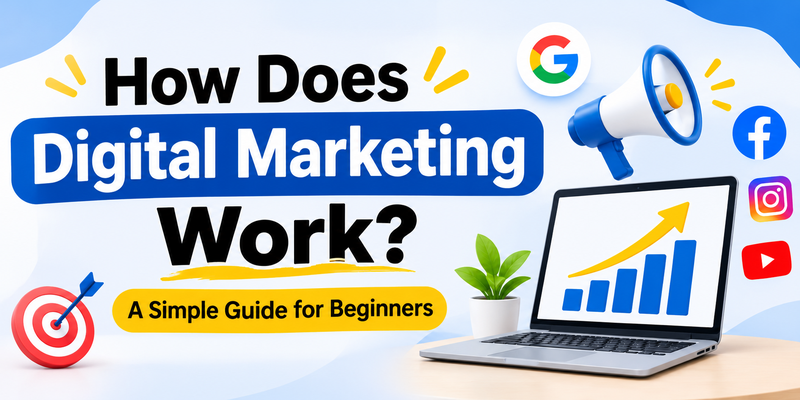
Next, the business shares its messages to reach potential customers and encourages them to take action, such as visiting a website, signing up for a newsletter, or buying a product. Finally, it checks the results to see what is working and what needs improvement.
In simple words, digital marketing follows these steps:
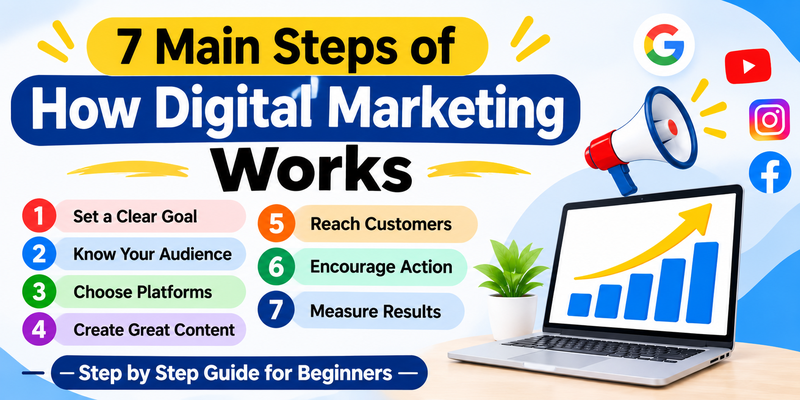
- Set a Goal: Decide what the business wants to achieve.
- Understand Customers: Identify the people who may need the product or service.
- Choose Platforms: Select the online platforms where those people spend time.
- Create Messages: Prepare useful content, images, videos, or ads.
- Reach People: Share the message through online platforms.
- Encourage Action: Guide visitors to take the next step.
- Measure Results: Check performance and improve future marketing efforts.
Each step is connected to the next. Together, these steps help a business reach the right people and work toward its marketing goals.
3. 7 Main Steps of How Digital Marketing Works
Step 1. Set a Clear Marketing Goal
A business should know what it wants to achieve before starting digital marketing. A clear goal helps the business choose the right methods and measure its progress.
- Increase brand awareness: Help more people learn about the business and its products.
- Get website traffic: Bring more visitors to the business website.
- Generate leads: Encourage interested people to share their contact details.
- Increase sales: Get more people to buy products or services.
- Example: An online clothing store may set a goal to increase online orders by 20% in three months.
Step 2. Identify the Target Audience
After setting a goal, a business needs to understand who it wants to reach. These people are called the target audience.
- Identify potential customers: Decide who is most likely to buy the product or service.
- Understand customer needs: Find out what customers want and what problems they face.
- Learn about their interests: Understand what type of products, content, and offers they like.
- Consider customer age and location: These details can help a business reach the right people.
- Choose the right audience: Focus on people who are more likely to become customers.
- Example: An online clothing store may target young adults who are interested in affordable and trendy clothes.
Step 3. Choose the Right Digital Platforms
Once a business understands its audience, it needs to choose the right platforms to reach them. Different platforms help businesses connect with people in different ways.
- Google: Reach people who search for products or services online.
- Social media: Connect with customers through posts, images, videos, and ads.
- Business website: Share product details, prices, contact information, and other useful content.
- Email: Send updates, special offers, and product information to interested customers.
- Choose according to your audience: Select platforms where potential customers spend their time.
- Example: An online clothing store may use Instagram to show new designs and Google to reach people searching for clothes online.
Step 4. Create the Right Marketing Message
After choosing the right platforms, a business needs to create a clear message for its audience. This message should explain what the business offers and how it can help people. Good content helps people understand the product or service and encourages them to learn more.
- Understand what to communicate: Decide what information you want to share with your audience. For example, an online clothing store may want to introduce its new summer collection.
- Create useful content: Share information that answers customer questions and explains your products or services.
- Choose the right content format: Use images, videos, blog posts, or advertisements based on your message and platform.
- Get people’s attention: Use simple words, clear information, and attractive visuals to make your message easy to understand and interesting.
Step 5. Reach Potential Customers
Once the marketing message is ready, the next step is to show it to potential customers. Businesses use different online methods to reach people who may be interested in their products or services. Some methods help businesses reach people without paying for promotion, while others require an advertising budget.
- Use organic reach: Share free content through social media posts, blogs, and search engine results to attract people naturally.
- Use paid promotion: Run online advertisements on platforms such as Google, Facebook, or Instagram to reach a selected audience.
- Help people discover the business: Customers may find a business through search engines, social media posts, online ads, or shared content.
- Give a simple example: An online clothing store can share product pictures on Instagram and run paid ads to reach people who are interested in buying clothes.
Step 6. Turn Visitors into Customers
When people visit a website or social media page, the business should help them understand its products or services. Visitors need clear information before they decide to buy something or contact the business. A good online experience can make this decision easier and help turn interested visitors into customers.
- Provide useful information: Add clear product descriptions, prices, features, and other important details to help visitors make a decision.
- Build customer trust: Display customer reviews, ratings, real product images, and clear business information.
- Make contact easy: Provide simple ways for visitors to ask questions, such as a contact form, email address, or WhatsApp option.
- Encourage visitors to take action: Add clear options such as “Buy Now,” “Contact Us,” or “Sign Up” so visitors know what to do next.
- Give a simple example: If someone likes a dress on an online store, clear pictures, prices, and customer reviews can help them feel confident about placing an order.
Step 7. Track Results and Improve Performance
Digital marketing does not end when people see an advertisement or visit a website. Businesses also need to check whether their marketing activities are producing good results. By tracking performance, they can understand what works well and make better decisions for future campaigns.
- Check marketing results: Review performance regularly to understand whether marketing activities are helping the business reach its goals.
- Measure important numbers: Track website visits, clicks, leads, and sales to understand how people respond to marketing activities.
- Find what works best: Identify which platforms, advertisements, and content bring more visitors or customers.
- Improve weak areas: If an advertisement gets clicks but few sales, the business can review its product page, price, or message.
- Improve future marketing: Use the collected results to make better decisions and improve upcoming marketing activities.
4. Real-Life Example: How Digital Marketing Works for an Online Clothing Store
Let’s understand how digital marketing works through a simple example. Imagine a fictional online clothing store called StyleWear. It sells shirts, dresses, and other clothing items through its website. The store wants to reach more people and increase online sales. Here is how it can use digital marketing step by step.
1. Set a Sales Goal
First, StyleWear sets a clear goal for its marketing activities. It wants to increase website orders and sell more clothes. A clear goal helps the store decide what actions it needs to take and how it will measure success.
For example, StyleWear sets these goals:
- Increase online sales by 20% in the next three months.
- Get more visitors to its website.
- Receive more orders from new customers.
- Promote its new clothing collection.
2. Identify the Target Audience
After setting its goal, StyleWear needs to understand who is most likely to buy its products. It studies the interests, needs, age groups, and shopping habits of potential customers. This helps the store create marketing messages that match what its customers want.
For example, StyleWear may target:
- Men and women aged 18 to 35.
- People interested in fashion and clothing.
- Customers who prefer shopping online.
- People looking for affordable and stylish clothes.
3. Choose the Right Digital Platforms
Now, StyleWear chooses the online platforms where it can reach its target audience. It does not need to use every platform. It selects the channels that best match its customers and marketing goals.
For example, StyleWear may use:
- Instagram: To share clothing photos, reels, and new collections.
- Facebook: To promote products and connect with potential customers.
- Google: To help people find its website through search results.
- Email: To send new collection updates and special offers to subscribers.
- Website: To display products and receive customer orders.
4. Create and Share the Marketing Message
After choosing its platforms, StyleWear creates useful and attractive marketing content. It uses clear product photos, short videos, and simple messages to show customers what it sells. The content should explain the product and give people a reason to visit the store.
For example, StyleWear may:
- Share photos of its new clothing collection on Instagram.
- Create short videos showing how different outfits look.
- Publish product details, prices, and sizes on its website.
- Share a special discount offer on Facebook.
- Send an email about newly added products.
5. Reach Potential Customers
Once the content is ready, StyleWear shares it through different digital channels. Some people may find the store through free search results or social media posts. Others may see its paid advertisements. This helps the store reach people who are interested in its products.
For example:
- A customer searches Google for affordable women’s dresses and finds the StyleWear website.
- Another person sees a clothing video on Instagram.
- A potential customer clicks on a Facebook advertisement.
- An email subscriber clicks a link to explore the new collection.
6. Turn Visitors into Customers
When people visit the StyleWear website, the store needs to make shopping simple and clear. Visitors should easily find product information, prices, available sizes, and payment options. If they like a product and trust the store, they may place an order.
For example:
- A visitor opens the StyleWear website.
- They explore different clothing products.
- They check the price, size, and product details.
- They add their favourite item to the shopping cart.
- They complete the checkout process and place an order.
7. Track Results and Improve Performance
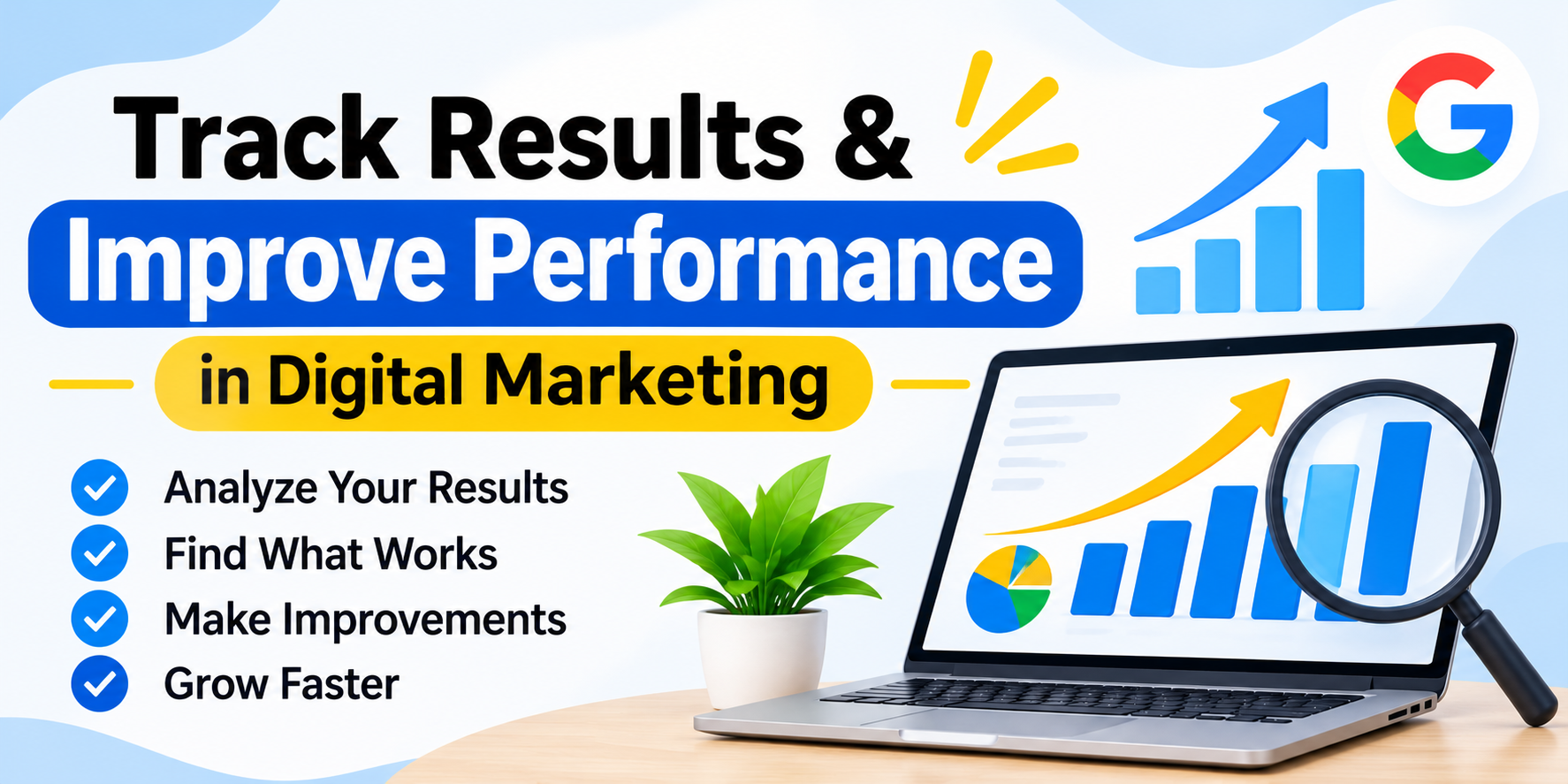
After running its marketing activities, StyleWear checks whether its efforts are producing good results. It studies website visits, advertisement clicks, customer orders, and sales. This information helps the store understand which activities are working and what needs improvement.
For example, StyleWear may check:
- How many people visited its website?
- Which platform brought the most visitors.
- How many visitors placed orders.
- Which products received the most attention.
- How much money it spent on advertisements compared to the sales it received.
Based on these results, StyleWear can improve its advertisements, content, and marketing activities to get better results in the future.
5. How Does Digital Marketing Work for Students?

Learn the Basic Working Process
Students who want to learn digital marketing should first understand how the process works. They do not need to learn every tool or platform at once. They can start with the basic steps and learn how businesses use online platforms to reach people.
- Understand the seven main steps of digital marketing.
- Learn how businesses use websites, search engines, and social media.
- Understand how businesses share content and promote their products online.
- Learn how businesses attract visitors and turn them into customers.
- Explore how businesses track their marketing results.
Practice with a Simple Project
After learning the basic process, students should try a small practice project. They can choose a fictional business and create a simple marketing plan. This helps them understand how digital marketing works in real situations.
- Choose a fictional small business, such as an online clothing store.
- Set one clear marketing goal, such as getting more website visitors.
- Identify the target audience, such as people interested in fashion.
- Choose a suitable platform, such as Instagram or Facebook.
- Create a sample marketing message or social media post.
- Decide how to measure the result, such as clicks, visitors, or customer inquiries.
Learn from the Results
Once students complete their practice project, they should review their work. This helps them understand which ideas worked and which areas need improvement. Learning from results also helps students make better marketing decisions in future projects.
- Check whether the marketing goal was achieved.
- Understand which platform or message worked well.
- Identify what could be improved.
- Find ways to make the next campaign better.
- Practice making decisions based on results.
6. How Do All Steps of Digital Marketing Work Together?
Digital marketing works best when all steps are connected. Each step supports the next one. A business first sets a goal, finds the right audience, chooses suitable platforms, and creates a clear message. After that, it reaches potential customers, encourages them to take action, and checks the results.
- Goals Give Direction: A clear goal helps a business decide what it wants to achieve. For example, an online clothing store may want to increase sales or attract more website visitors.
- The Audience Helps Choose the Right Platforms: When a business knows its target audience, it can choose platforms where those people spend time. For example, it may use Instagram to reach people interested in fashion.
- Platforms Help Deliver the Message: After choosing the right platforms, the business shares useful content, product pictures, videos, or advertisements to get people’s attention.
- The Message Encourages Customer Actions: A clear message helps people understand the product and its value. It may encourage them to visit the website, contact the business, or place an order.
- Customer Actions Help Measure Results: When people click an ad, visit a website, or make a purchase, the business can track these actions to understand its performance.
- Results Help Improve Future Efforts: By checking the results, a business can find out what is working and what needs improvement. It can then make better decisions for its next campaign.
What Happens When a Business Skips a Step?
If a business skips an important step, its marketing efforts may not produce good results. For example:
- Without a clear goal, the business may not know what it wants to achieve.
- Without knowing its audience, it may show ads to the wrong people.
- Without choosing the right platform, it may fail to reach potential customers.
- Without a clear message, people may not understand the offer.
- Without tracking results, the business may not know whether its efforts are working.
Short Example:
Imagine an online clothing store that wants to sell more summer dresses. First, it sets a sales goal and identifies people interested in fashion. Then, it chooses Instagram to reach those customers and shares attractive dress pictures with a clear message. Interested people visit its website and place orders. Finally, the store checks website visits, clicks, and sales to see how well its campaign performed.
This shows that every step has a purpose. When all steps work together, a business can reach the right people, encourage customer actions, and improve its digital marketing efforts.
Conclusion
Now that we have covered all the steps, you have a clear idea of how digital marketing works and how businesses use it to reach the right customers online. From setting clear goals to choosing the right platforms and tracking results, every step plays an important role. When these steps work together, a business can connect with potential customers and improve its marketing efforts.
My recommendation is to start by setting a clear goal and understanding your target audience. These two steps will help you choose the right platforms and create messages that match customer needs. If you are a beginner or student, try this process with a simple project, such as promoting an online clothing store. Start small, check the results, and learn what works best.
Remember, digital marketing takes time and practice. You do not need to learn everything in one day. Focus on one step at a time, apply what you have learned, and keep improving your skills. Stay consistent and move forward with confidence!
Frequently Asked Questions About How Digital Marketing Works
In this article, we have answered some common questions about how digital marketing works. These answers will help beginners understand the process and take their first steps with more confidence.
1. Can digital marketing work without a website?
Yes, a business can use digital marketing without having its own website. It can promote products or services through social media pages, online marketplaces, and messaging apps. For example, a small clothing business can share product pictures on Instagram and receive orders through direct messages. However, a website can give customers one place to learn about the business and explore its products.
2. What is the difference between organic and paid digital marketing?
Organic digital marketing helps a business reach people without paying for each click or view. Paid digital marketing uses advertising budgets to promote content and reach selected audiences.
- Organic marketing: SEO, regular social media posts, and unpaid content.
- Paid marketing: Google Ads, sponsored social media posts, and display ads.
Both methods can support the same marketing goal.
3. How much money do beginners need to start digital marketing?
Beginners can start digital marketing with a small budget or even no advertising budget. Many platforms offer free accounts and basic tools for creating and sharing content. You can begin by promoting a simple project through social media or creating useful website content. If you want to run paid ads, start with an amount you can afford and check the results before spending more.
4. Is digital marketing suitable for service-based businesses?
Yes, digital marketing works for service-based businesses such as salons, repair services, tutors, and cleaning companies. These businesses can share useful information, show customer reviews, and explain their services online. They can also use local search and social media to help nearby customers find them. Clear service details and contact information can make it easier for people to get in touch.
5. Can one person manage digital marketing for a small business?
Yes, one person can manage basic digital marketing activities for a small business. The key is to start with a few suitable tasks instead of trying to manage every platform at once.
- Create and share social media content.
- Update the business website or online profile.
- Reply to customer questions.
- Check basic marketing results.
As the business grows, it may need extra help with content, advertising, or SEO.
6. Which type of content should a beginner create first?
A beginner should start with content that answers customer questions and explains the product or service clearly. The best format depends on the audience and the platform.
- Images: Useful for showing products and offers.
- Short videos: Helpful for demonstrations and quick tips.
- Blog posts: Good for answering detailed questions.
- Customer reviews: Help people learn about other customers’ experiences.
Choose one or two formats that you can create regularly.
7. Why do some digital marketing campaigns fail to get results?
Digital marketing campaigns may fail when they do not match customer needs or business goals. Sometimes, businesses choose the wrong audience, use unclear messages, or spend money without checking performance. A campaign may also need more time or testing before it produces useful results. Review the response, find the weak areas, and make small changes instead of repeating the same approach.
8. How often should a business check its digital marketing results?
A business should check its marketing results regularly to understand how its campaigns perform. For active advertising campaigns, checking results every few days can help identify problems early. For longer-term activities, such as SEO, a weekly or monthly review may be more useful. The right schedule depends on the type of campaign and its goals.
9. When should a business change its digital marketing approach?
A business should consider changing its approach when its current activities do not support its goals or reach the right customers. Before making a big change, review the data and identify what needs improvement. You may need to update your content, test a different message, or try another platform. Make changes based on actual results rather than guesses.
10. What skills help someone understand how digital marketing works?
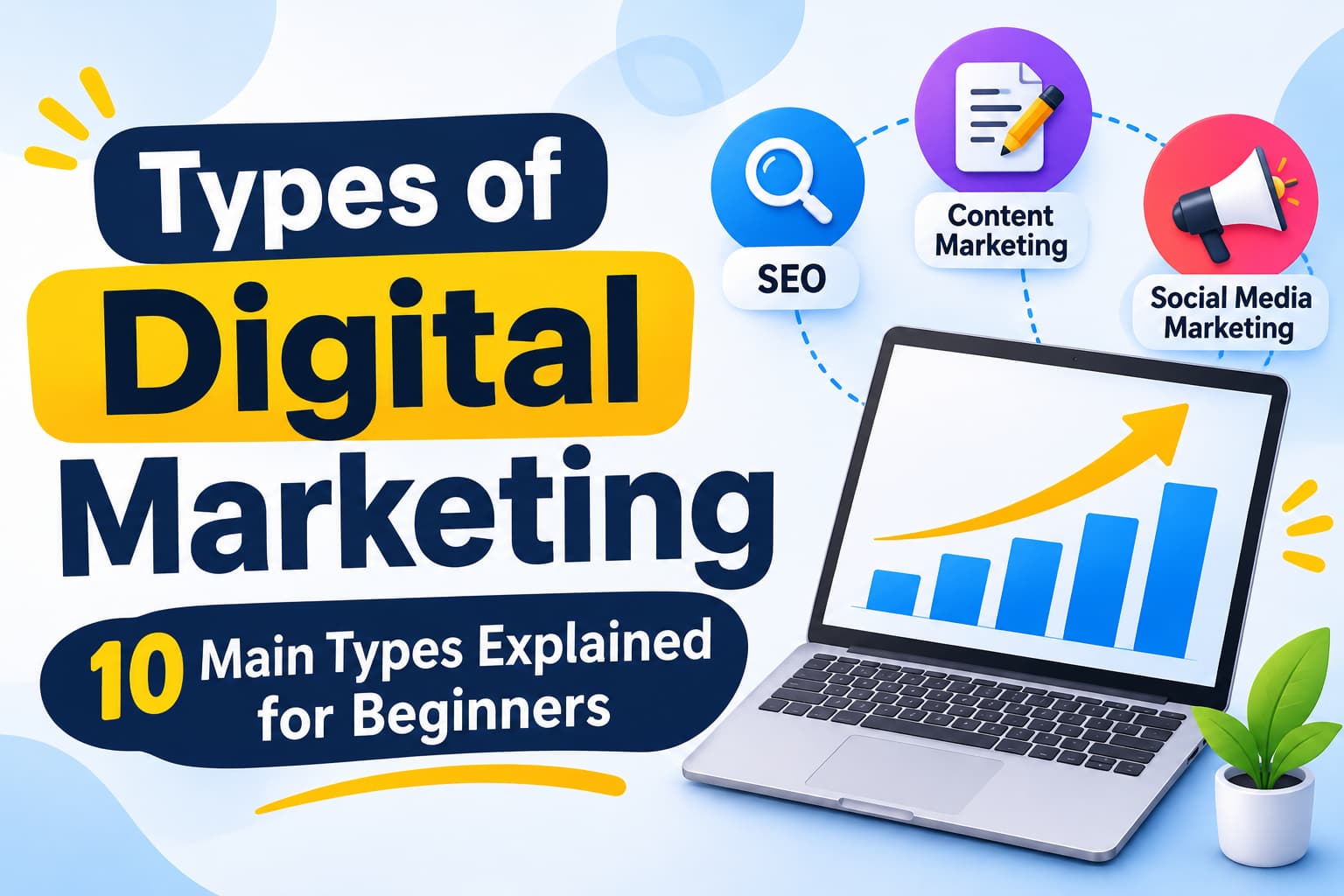
Basic communication, creativity, research, and problem-solving skills can help someone learn digital marketing. You do not need to master every skill before you begin.
- Communication: Helps you create clear messages.
- Research: Helps you understand customers and competitors.
- Creativity: Helps you develop useful content.
- Data analysis: Helps you understand campaign results.
- Adaptability: Helps you learn new tools and methods.
Start with the basics and build these skills through regular practice.


- Be Respectful
- Stay Relevant
- Stay Positive
- True Feedback
- Encourage Discussion
- Avoid Spamming
- No Fake News
- Don't Copy-Paste
- No Personal Attacks
- Be Respectful
- Stay Relevant
- Stay Positive
- True Feedback
- Encourage Discussion
- Avoid Spamming
- No Fake News
- Don't Copy-Paste
- No Personal Attacks
