What Are Digital Marketing Channels and What Are Some Examples?
Published: 28 Nov 2026
Have you ever wondered how businesses reach people online? Some businesses appear in Google search results, while others share videos, send emails, or promote products on social media. They use different digital marketing channels to connect with their audience.
Digital marketing channels give businesses different ways to share information, promote products, and communicate with customers. Each channel has its own purpose and can help a business reach people in a different way.
In this guide, we will explain what digital marketing channels are, explore their main types, and look at real examples.
Let’s explore digital marketing channels together!
1. What Are Digital Marketing Channels?
Digital marketing channels are online ways that businesses use to reach and communicate with their target audience. These channels help businesses share information, promote products, provide updates, and connect with potential customers.
For example, a clothing store can use Instagram to share product pictures, a website to display its collection, and email to send special offers. Each of these is a digital marketing channel.
In simple words, a digital marketing channel is a way for a business to reach people through the internet.
Businesses can use one channel or several channels based on their audience, products, and needs. The right choice depends on where customers spend their time and how they prefer to receive information.
2. What Are the Main Types of Digital Marketing Channels?
Digital marketing channels are commonly grouped into three main categories: owned media, paid media, and earned media. Each category plays a different role in how a business reaches and connects with its audience. You can learn more about these in our detailed guide on Types of Digital Marketing.
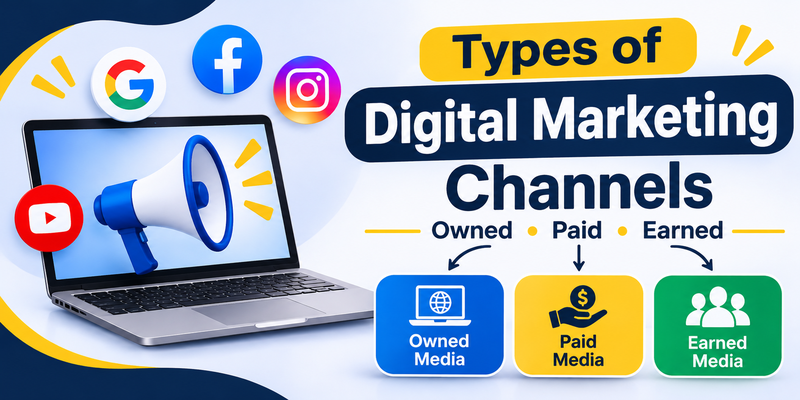
Let’s understand each type with simple examples.
1. Owned Media Channels
Owned media channels are online spaces that a business controls. A business can create, manage, and update content on these channels. It does not need to pay another company for every post or update.
Common examples of owned media channels include:
- Business Website: A business website gives customers information about a company, its products, services, and contact details.
- Blog: A blog allows a business to publish helpful articles, guides, news, and other useful information.
- Email List: A business can build a list of people who agree to receive its emails.
- Mobile App: A business can use its own app to share product updates, offers, and useful information with customers.
Example: Imagine a clothing store that has its own website and mobile app. The store displays its products on the website and shares new collection updates with email subscribers. These are examples of owned media because the business controls the content and manages these spaces.
Why do businesses use owned media?
- They have more control over their content.
- They can share information directly with visitors and subscribers.
- They can build a long-term online presence.
- They can update their information whenever needed.
Owned media is useful for businesses that want to build a lasting online space for their brand.
2. Paid Media Channels
Paid media channels are online channels where businesses pay to promote their products, services, or content. They help businesses show advertisements to selected audiences.
Common examples of paid media channels include:
- Google Ads: Businesses pay to display advertisements in Google search results and other advertising spaces.
- Social Media Ads: Businesses pay to promote posts or display ads on platforms such as Facebook and Instagram.
- Sponsored Content: A business pays a website, publisher, or content creator to promote its products or services.
- Display Advertising: Businesses pay to show image or banner advertisements on websites and apps.
Example: Imagine a restaurant that wants more people to know about its new menu. It pays to run advertisements on Facebook and Instagram. These ads can reach people who may be interested in visiting the restaurant.
Why do businesses use paid media?
- They can reach selected groups of people.
- They can promote products and services to a wider audience.
- They can increase the visibility of a new offer.
- They can control how much money they spend on advertising.
Paid media can help businesses gain attention, but they need to plan their spending carefully.
3. Earned Media Channels
Earned media channels are online mentions, reviews, and recommendations that a business receives from other people without paying them to share the message.
Customers, bloggers, publishers, and other people may talk about a business because they like its products, services, or content.
Common examples of earned media channels include:
- Customer Reviews: Customers share their experiences on websites such as Google Reviews.
- Online Mentions: People mention a business on websites, blogs, or social media.
- Customer Recommendations: Happy customers suggest a business to their friends, family, or followers.
- Unpaid Media Coverage: News websites or bloggers mention a business without receiving payment for the coverage.
Example: Imagine an online shoe store. A customer buys a pair of shoes and shares a positive review on Google. Another customer recommends the store to a friend. These are examples of earned media because the business receives attention through other people’s actions.
Why do businesses value earned media?
- Positive reviews can help build trust.
- Recommendations can introduce a business to new people.
- Online mentions can increase brand visibility.
- Good customer experiences may encourage people to share their opinions.
Businesses cannot fully control earned media. However, they can provide good products and customer service to encourage positive experiences.
3. What Are the Most Common Digital Marketing Channels?
Businesses use different digital marketing channels to reach people online. Each channel gives them a different way to share information and connect with their audience.
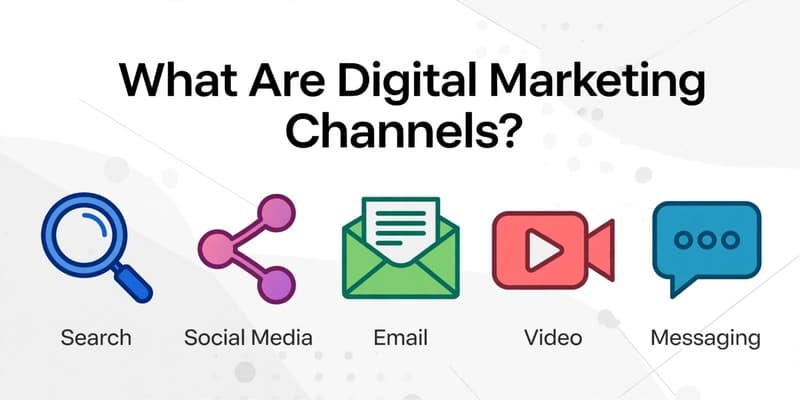
Here are eight common digital marketing channels with simple explanations and examples.
1. Search Engine Channels
Search engine channels help businesses reach people who are looking for information, products, or services online. People use search engines to find answers, compare products, and discover businesses.
Common search engine platforms include:
- Google: Businesses can make their websites visible in Google search results so people can discover their products and services.
- Bing: Businesses can also reach people through Bing when their websites appear in relevant search results.
- Other Search Engines: Other search services can help people discover websites and useful information.
Example: Imagine someone wants to buy a new mobile phone. They search for mobile phones online and find a store’s website in the search results. They visit the website to explore available models and prices.
Search engines can help businesses connect with people who are already looking for something related to their products or services.
2. Social Media Channels
Social media channels allow businesses to share content and communicate with people through social networking platforms. Businesses can post pictures, videos, updates, and other content to introduce their products and connect with their audience.
Common social media platforms include:
- Facebook: Businesses share product pictures, updates, events, and offers.
- Instagram: Businesses use posts, Stories, and Reels to display products and share visual content.
- LinkedIn: Companies share professional updates, business news, and industry information.
- Pinterest: Businesses share images, designs, and ideas that people can save and explore.
- TikTok: Businesses publish short videos to introduce products, share tips, and entertain viewers.
Example: A clothing shop shares pictures of its new collection on Instagram. People can view the designs, ask questions, and visit the shop’s website to learn more.
Different social media platforms attract different audiences. A business should choose platforms that suit its customers and the type of content it wants to share.
3. Website and Blog Channels
Websites and blogs give businesses an online space where people can learn about their products, services, and company information.
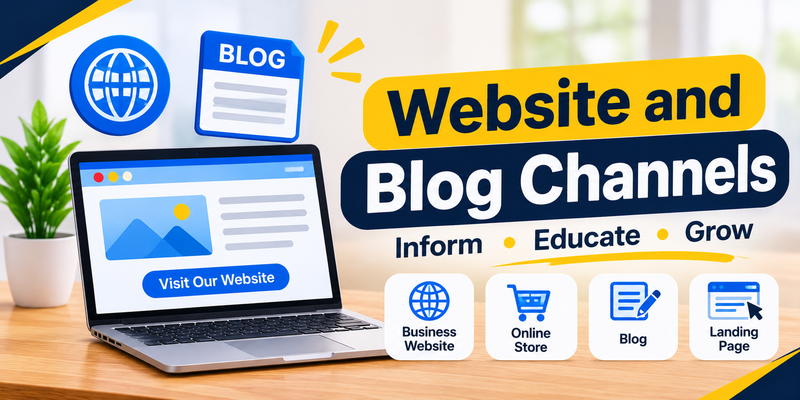
A website can act as a central place for customers who want to explore a business. A blog can provide helpful information and answer questions related to its products or services.
Common examples include:
- Business Websites: These websites share company information, services, contact details, and other important details.
- Online Stores: These websites allow customers to browse products, check prices, and place orders.
- Business Blogs: These blogs publish articles, guides, tips, and other helpful content.
- Landing Pages: These are specific web pages created to share information about an offer, product, or service.
Example: Imagine a customer wants to buy a laptop. They visit an online store to check different models, compare prices, read product details, and place an order.
Websites and blogs give businesses more control over the information they share with visitors.
4. Email Channels
Email is a direct communication channel that allows businesses to send messages to people who have shared their email addresses and agreed to receive communication.
Businesses use email to share news, product updates, helpful information, and special offers.
Common examples of email communication include:
- Newsletters: Businesses send regular emails with company news, updates, and useful tips.
- Product Updates: Businesses inform customers about new products, collections, or services.
- Promotional Emails: Businesses share discounts, seasonal offers, and special deals.
- Order Confirmation Emails: Online stores send order details after customers make a purchase.
- Event Invitations: Businesses invite subscribers to online or offline events.
Example: An online clothing store sends an email to its subscribers about a new collection. The email includes product pictures and a discount code for selected items.
Email is useful when a business wants to communicate directly with people who have chosen to receive its messages.
5. Video-Sharing Channels
Video-sharing channels allow businesses to publish videos and reach people who enjoy watching visual content. Businesses can use videos to introduce products, show how something works, explain a service, or share useful information.
Common video-sharing platforms include:
- YouTube: Businesses publish tutorials, product demonstrations, reviews, and educational videos.
- TikTok: Businesses share short videos to introduce products and reach viewers.
- Instagram Reels: Businesses create short videos to display products, share ideas, and show behind-the-scenes content.
Example: A beauty store creates a YouTube video showing how to use a new skincare product. It also shares a short version of the video on Instagram Reels.
Video channels are useful when customers need to see a product or understand how something works before making a decision.
6. Messaging Channels
Messaging channels allow businesses to communicate directly with customers through online messaging services. Customers can ask questions, request information, and receive replies.
Common messaging platforms include:
- WhatsApp: Businesses answer customer questions, share product details, and provide order updates.
- Facebook Messenger: Businesses communicate with customers through direct messages.
- Telegram: Businesses can share updates, information, and announcements with their audience.
- Business Chat Services: Some websites use live chat tools to answer visitor questions.
Example: A customer wants to order food from a restaurant. They send a message through WhatsApp to ask about the menu, prices, and delivery options. The restaurant replies with the required details.
Messaging channels are especially useful when customers want quick answers or direct communication.
7. Online Advertising Channels
Online advertising channels allow businesses to pay for advertisements that appear on search engines, websites, apps, and social media platforms.
These channels help businesses promote specific products, services, offers, or events.
Common examples include:
- Search Ads: Paid advertisements that appear in search engine results.
- Display Ads: Image or banner advertisements that appear on websites and apps.
- Social Media Ads: Paid advertisements shown on social platforms.
- Video Ads: Advertisements that appear before, during, or after online videos.
Example: A shoe store wants to promote its new running shoes. It runs search ads that appear when people search for related products online.
Online advertising is part of paid media. The difference is that paid media is the broader category, while online advertising includes specific ways to display paid promotions.
8. Affiliate and Referral Channels
Affiliate and referral channels help businesses reach new customers through recommendations and partnerships.
Affiliate marketing usually involves a person or website promoting a business’s product through a special link. The affiliate may earn a commission when someone makes a purchase through that link.
Referral marketing involves existing customers recommending a business to other people. Some businesses offer rewards for successful referrals, while others receive recommendations without offering payment.
Common examples include:
- Affiliate Websites: Website owners promote products through special links.
- Product Review Websites: Review websites share product information and may earn commissions through affiliate links.
- Customer Referrals: Existing customers recommend products or services to friends and family.
- Creator Partnerships: Content creators introduce products to their audiences through agreed promotional partnerships.
Example: A blogger writes a review of a mobile phone and adds an affiliate link. When a reader buys the phone through that link, the blogger earns a commission.
These channels can help businesses reach people through trusted recommendations and relevant partnerships.
4. Digital Marketing Channels Comparison Table
Different digital marketing channels serve different purposes. Some help people discover a business, while others help businesses communicate with customers or promote products.
The following table compares common channels and their examples.
| Digital Marketing Channel | Examples | Main Use |
| Search Engines | Google, Bing | Help people discover websites through searches |
| Social Media | Facebook, Instagram, LinkedIn | Share content and connect with audiences |
| Websites and Blogs | Business websites, online stores, blogs | Provide information about products and services |
| Newsletters, promotional emails | Send direct updates and offers | |
| Video-Sharing | YouTube, TikTok | Share videos and product demonstrations |
| Messaging | WhatsApp, Messenger, Telegram | Communicate directly with customers |
| Online Advertising | Search ads, display ads, video ads | Promote products through paid advertisements |
| Affiliate and Referral | Affiliate websites, customer recommendations | Reach people through recommendations and partnerships |
This comparison can help beginners understand the main purpose of each channel. However, the best channel depends on the business and the people it wants to reach.
5. What Is the Difference Between Digital Marketing Channels and Platforms?
Digital marketing channels and platforms are closely related, but they do not mean exactly the same thing.
A digital marketing channel is a way for a business to reach and communicate with customers online. A digital marketing platform is a specific website, app, or online service that people use through that channel.
For example, social media is a channel, while Facebook and Instagram are platforms.
Here are some simple examples:
| Channel | Platform Examples |
| Search Engines | Google, Bing |
| Social Media | Facebook, Instagram, LinkedIn |
| Gmail, Outlook, email marketing services | |
| Video-Sharing | YouTube, TikTok |
| Messaging | WhatsApp, Messenger, Telegram |
Let’s understand with an example:
Imagine a clothing store wants to show its new collection to customers. It chooses social media as its marketing channel and uses Instagram as the platform to share product pictures and videos.
In simple words, the channel explains the way a business reaches people, while the platform is the specific place or service it uses.
6. How Can a Small Business Use Different Digital Marketing Channels?
A small business does not need to use every digital marketing channel. It can start with a few channels that match its customers and business needs.
Let’s take the example of a small clothing store. Here is how it can use different channels:
Website: The store creates a website to display clothing designs, prices, sizes, and contact details. Customers can visit the website to explore available products.
Instagram: The store shares product pictures, short videos, and new collection updates. Customers can follow the page to see the latest designs.
WhatsApp: The store answers questions about prices, sizes, colors, and orders. Customers can contact the business directly.
Email: The store sends emails about new collections, seasonal offers, and special discounts to subscribers.
Google Ads: The store runs paid advertisements to promote its products to people searching for related items online.
Each channel has a different role. The website displays products, Instagram shares visual content, WhatsApp supports direct communication, email sends updates, and Google Ads promotes products through paid advertising.
A small business can choose only the channels it can manage properly. It can add more channels when its needs and resources grow.
7. How to Choose the Right Digital Marketing Channels for Your Business
Choosing the right digital marketing channels can help a business reach the people it wants to connect with. However, every business has different customers, budgets, and resources. The best channels are the ones that match these needs.
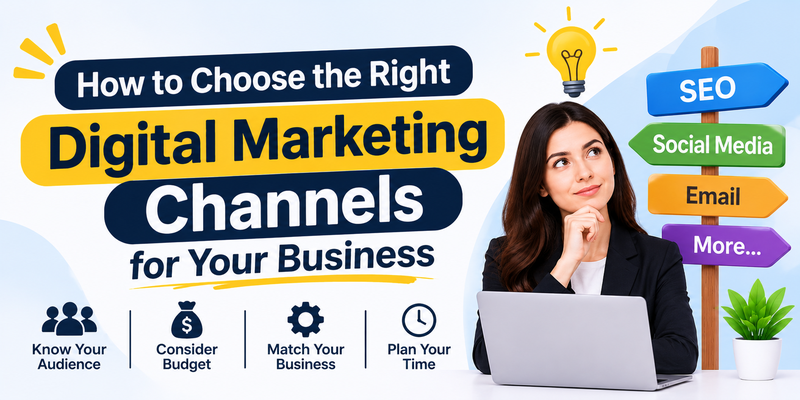
Here are some important points to consider before choosing your channels.
Understand Your Target Audience
First, learn about the people you want to reach. Think about their interests, needs, and online habits. This can help you understand which channels they use most.
- Know your customers: Understand their interests, needs, and preferences.
- Find their favorite platforms: Check whether they use Google, Facebook, Instagram, YouTube, or other platforms.
- Understand what they need: Find out what information, products, or services they look for online.
- Choose suitable channels: Focus on the channels your target audience already uses.
Example: If your business sells clothes to young people, Instagram and TikTok may be useful channels to explore.
Consider Your Business Budget
Your budget is another important factor. Some channels allow businesses to share content without paying for every post, while others need an advertising budget.
- Set a clear budget: Decide how much money you can spend.
- Explore free options: Start with a website, social media pages, or email communication.
- Plan paid advertising: Consider Google Ads or social media ads when your budget allows.
- Avoid unnecessary spending: Do not pay for channels that do not match your business needs.
Example: A small bakery can start with a Facebook page and Instagram account. It can consider paid advertisements later when it has a suitable budget.
Choose Channels That Match Your Business
Different businesses may need different channels. A channel that works well for one business may not be the best choice for another.
- Online stores: Websites, Instagram, Facebook, and email can help display products and share updates.
- Local businesses: Search engines, social media, and messaging apps can help nearby customers find and contact them.
- Educational businesses: Websites, blogs, YouTube, and email can help share learning information.
- Professional services: LinkedIn, websites, and email can help businesses share professional information.
Example: A restaurant can use Instagram to share food pictures and WhatsApp to answer customer questions.
Think About Your Available Time and Resources
Each channel needs time and effort. Some require regular content, while others need quick replies or frequent updates.
- Check your available time: Decide how much time you can give to each channel.
- Consider your skills: Choose channels that match your content and communication skills.
- Plan your content: Prepare a simple schedule for posts, videos, and emails.
- Start with fewer channels: Focus on two or three suitable channels instead of managing too many at once.
Example: If you run a small business alone, you can start with Instagram and WhatsApp instead of trying to manage six platforms.
Test Your Selected Channels
Testing different channels can help you understand which ones are useful for your business. You do not need to invest heavily in every channel from the beginning.
- Start small: Try a few channels that match your audience.
- Check customer responses: Look at messages, clicks, comments, and inquiries.
- Compare the results: Find out which channels bring useful visitors and customers.
- Make improvements: Change your approach when a channel does not meet your needs.
- Focus on suitable channels: Give more attention to the channels that support your business.
Example: If Instagram brings more customer inquiries than Facebook, you can spend more time improving your Instagram content.
To choose the best channel, you must know your business goal. Read our guide on Five Main Goals of Marketing.
8. Common Mistakes to Avoid When Choosing Digital Marketing Channels
Choosing suitable channels is important, but businesses can make mistakes when selecting or managing them. These mistakes may waste time, money, and effort.
Here are some common mistakes to avoid.
1. Using Too Many Channels at Once
Some businesses try to use every online platform at the same time. This can make it difficult to create content and reply to customers.
What to do: Start with a few channels that match your audience and business needs. Add more when you can manage them properly.
2. Choosing Channels Without Understanding Customers
A business may choose a platform simply because it is popular. However, its target customers may not use that platform regularly.
What to do: Learn where your customers spend time online before choosing a channel.
3. Posting Without a Clear Purpose
Sharing random content can make it difficult for customers to understand what a business offers.
What to do: Give every post a clear purpose. It may share product information, answer a question, or introduce a new offer.
4. Ignoring Customer Messages
Customers may contact a business through social media, email, or messaging apps. Ignoring their questions can create a poor experience.
What to do: Check your messages regularly and reply with clear, helpful information.
5. Using the Same Content on Every Platform
Different platforms support different content formats and audience habits. A long business update may suit LinkedIn, while a short product video may work better on TikTok.
What to do: Adjust your content to match the platform and its audience.
6. Not Checking Channel Performance
Some businesses continue using a channel without checking whether it brings useful results.
What to do: Review important results such as website visits, clicks, inquiries, and sales. Use this information to decide whether a channel is worth your time and budget.
9. Conclusion
Digital marketing channels give businesses different ways to reach people and communicate with customers online. Common examples include search engines, social media, websites, email, video-sharing platforms, messaging apps, online advertising, and affiliate channels. Each channel has a different purpose and can support a business in its own way.
My recommendation is to choose channels based on your target audience, business type, budget, and available time. You do not need to use every platform. For example, a small clothing store can start with a website, Instagram, and WhatsApp to display products and communicate with customers.
Choosing suitable digital marketing channels can help your business build stronger connections with its audience. Start with the channels that match your needs, learn how to use them well, and make improvements as your business grows.
10. Frequently Asked Questions (FAQs)
These frequently asked questions cover common doubts beginners may have about digital marketing channels, their uses, and how businesses can choose them.
1. What Are the Five Main Digital Marketing Channels?
Five common digital marketing channels are search engines, social media, websites, email, and online advertising.
- Search Engines: Help people discover websites through online searches.
- Social Media: Allow businesses to share content and connect with audiences.
- Websites: Give customers a place to explore business information and products.
- Email: Helps businesses send updates and offers directly to subscribers.
- Online Advertising: Allows businesses to promote products through paid ads.
These are common examples, but businesses can use other channels based on their needs.
2. Which Digital Marketing Channel Is Best for Beginners?
The best channel depends on the business and its target audience. Social media can be a simple starting point because many platforms allow businesses to create free accounts and share content.
For example, a small clothing store can use Instagram to display its products. A local restaurant can use Facebook to share its menu and updates.
Beginners should choose a channel they can manage and that their customers already use.
3. What Is the Difference Between a Digital Marketing Channel and a Platform?
A digital marketing channel is a way to reach customers online, while a platform is a specific website or app used through that channel.
For example:
- Channel: Social media
- Platforms: Facebook, Instagram, and LinkedIn
Similarly, email is a marketing channel, while an email service helps businesses create and send messages.
4. Can a Business Use More Than One Digital Marketing Channel?
Yes, a business can use multiple digital marketing channels to reach customers in different ways.
For example, an online store can use a website to display products, Instagram to share pictures, and email to send special offers. Each channel has a different role.
However, a business should choose channels it can manage properly instead of trying to use every platform.
5. How Do I Know If a Digital Marketing Channel Is Working?
You can check the results of a channel to understand whether it is helping your business.
Some useful measurements include:
- Website Visits: How many people visit your website?
- Clicks: How many people click your links or advertisements?
- Engagement: How many people like, comment on, or share your content?
- Inquiries: How many people contact your business?
- Sales: How many visitors become paying customers?
The most useful measurement depends on the purpose of the channel.
6. Why Are Digital Marketing Channels Important for Small Businesses?
Digital marketing channels help small businesses connect with people online and share information about their products or services.
For example, a small bakery can use Instagram to share pictures of its cakes, WhatsApp to answer customer questions, and a website to display its menu and contact details.
These channels give small businesses different ways to reach customers without depending only on physical stores.
7. When Should a Business Change Its Digital Marketing Channels?
A business should consider changing its channels when they no longer reach the right audience or support its needs.
For example, if a business receives very few inquiries from one platform, it can explore another platform that its customers use more often.
Before making a change, it is useful to review the results and understand why the current channel is not working well.
8. Is a Mobile App a Digital Marketing Channel?
Yes, a mobile app can work as an owned digital marketing channel when a business creates and manages its own app.
Businesses can use apps to share product updates, send notifications, display offers, and provide useful information.
For example, a shopping store can use its mobile app to notify customers when new products become available.
9. What Is the Difference Between Online and Offline Marketing Channels?
Online marketing channels use the internet to reach customers, while offline marketing channels use traditional methods that do not depend on the internet.
Examples of online channels:
- Websites
- Search engines
- Social media
- Online advertisements
Examples of offline channels:
- Television
- Radio
- Newspapers
- Flyers
- Billboards
Businesses can use both types of channels depending on their audience and needs.
10. Which Digital Marketing Channels Are Best for Local Businesses?
Local businesses should choose channels that help nearby customers find information about their products and services.
Some useful options include:
- Google Business Profile: Helps people find business details, location, contact information, and customer reviews on Google.
- Local Search: Helps nearby customers discover relevant businesses through search results.
- Social Media: Allows businesses to share local updates, pictures, and offers.
- WhatsApp: Helps customers ask questions and contact the business directly.
For example, a local restaurant can use Google Business Profile to share its location and opening hours, Instagram to display food pictures, and WhatsApp to receive customer questions.



- Be Respectful
- Stay Relevant
- Stay Positive
- True Feedback
- Encourage Discussion
- Avoid Spamming
- No Fake News
- Don't Copy-Paste
- No Personal Attacks
- Be Respectful
- Stay Relevant
- Stay Positive
- True Feedback
- Encourage Discussion
- Avoid Spamming
- No Fake News
- Don't Copy-Paste
- No Personal Attacks
